

216 reviews
Updated April 2026 · about a 7 minute read

Same red and near infrared light, three very different shapes. Convenience is what decides it.
The short answer
An LED face mask is the easiest hands free option for whole face sessions; a panel or stand covers a larger area, face, neck and chest, but you sit in front of it; a wand is small and targeted. For most people wanting a simple at home routine, a mask wins on convenience. Browse red light therapy at home.
Red light therapy has moved from the salon to the bathroom shelf, and the first question everyone asks is which format to buy. They all use the same idea, gentle red and near infrared light, just in different shapes. Here is the plain English breakdown so you can pick the one you will actually reach for a few times a week.
LED face mask
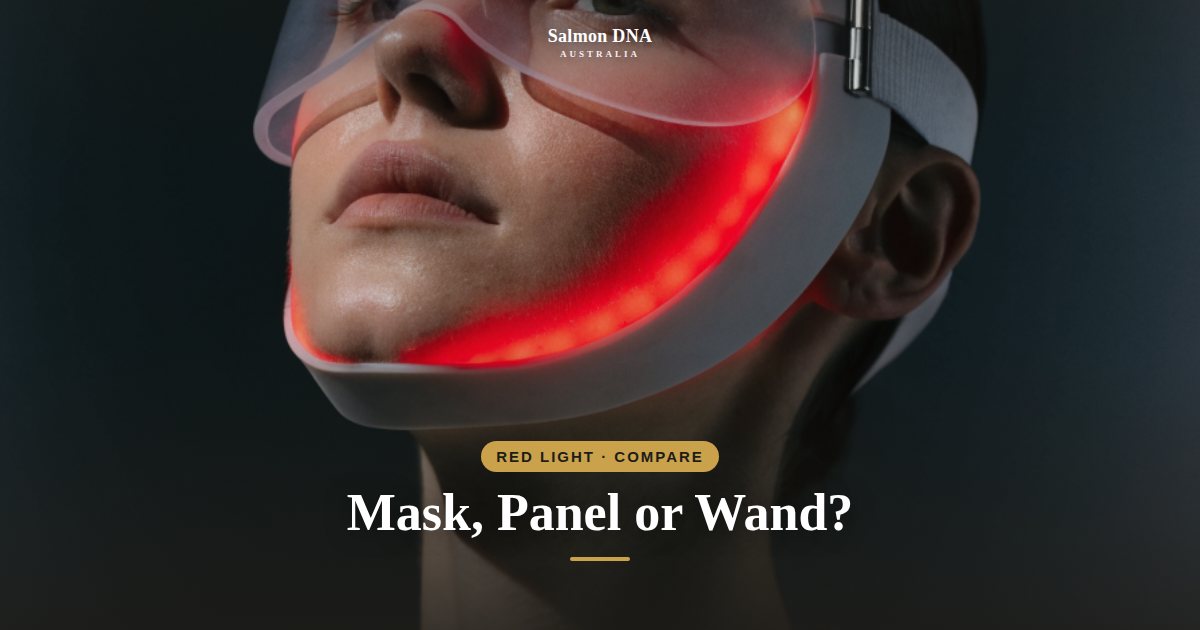
A flexible mask you wear, so your hands are free and the whole face is covered evenly. It is the most convenient format for a consistent routine, because you can relax, scroll or potter about during a session rather than holding anything in place.
- Best for: hands free, whole face sessions and easy consistency.
- Look for: red (around 630 to 660nm) plus near infrared (around 830nm), a comfortable silicone fit, cordless and rechargeable, and included eye protection.
- Our pick: the Dual Near Infrared & Red Light LED Face Mask, cordless, flexible silicone, with red light and 830nm near infrared.
Red light panel or stand
A larger flat panel, or a stand, that you sit in front of. It can cover more than the face, taking in the neck, chest and even the hands, but it is less hands free, since you need to stay positioned in front of it for the whole session.
- Best for: treating larger areas and people who like a fixed wind down spot.
- Trade off: it takes up space and you cannot move around during a session.

The best format is not the fanciest one, it is the one you will actually use a few nights a week.
Red light wand or torch
A small handheld tool for spot, targeted use. It is compact and travel friendly, but slow for whole face coverage because you move it around by hand, section by section.
- Best for: small, targeted areas and topping up between fuller sessions.
- Trade off: not practical for covering the whole face evenly.
Quick comparison
| Format | Coverage | Hands free? | Best for |
|---|---|---|---|
| LED face mask | Whole face, even | Yes | Easy, consistent at home routines |
| Panel or stand | Face and body areas | No | Larger areas, a fixed wind down spot |
| Wand or torch | Small, targeted | No | Spot use and travel |
What to look for in any red light tool
- Red wavelengths around 630 to 660nm, with near infrared around 830nm as a bonus
- A comfortable format you will actually use a few times a week
- Included eye protection and clear instructions
- A reputable brand and genuine, locally supported stock
How to use it (whichever you choose)
Use on clean, bare skin for 10 to 20 minutes, a few times a week, following the instructions that come with your mask, panel or wand. Many people apply a gentle salmon DNA (PDRN) serum first and finish with moisturiser. New to red light? Start with our red light therapy guide.

CureNex Salmon DNA & Peptide Daily Serum
A gentle, fragrance free daily serum that layers beautifully under red light or with your at home skin tool.
$49.50 AUDAfterpay available · free shipping over $150Shop the daily serum →
Shop red light therapy at home →
Frequently asked questions
Is an LED face mask better than a panel?
Neither is better, they suit different needs. A mask is hands free and great for easy, consistent whole face sessions; a panel covers larger areas but you sit in front of it. For most at home routines, a mask wins on convenience.
What wavelength should a red light tool be?
Look for visible red around 630 to 660nm, ideally with near infrared around 830nm for a more thorough feeling session.
How often should I use a red light tool?
A few sessions a week of 10 to 20 minutes is typical. Follow the instructions that come with your mask, panel or wand, and use any included eye protection.
Disclaimer: at home LED masks, panels and wands are cosmetics, not therapeutic goods, and are not intended to diagnose, treat, cure or prevent any disease or condition. Always follow the instructions that come with your red light tool and use any included eye protection. Products containing salmon DNA are not suitable for those with fish allergies.
