

216 reviews
Updated August 2026 · about a 7 minute read

Gentle, gradual, and honest: what a derma stamp can really do for your skin.
The short answer
A derma stamp is a handheld at home skin tool (a roller, stamp or pen) you press straight down, rather than drag, to create tiny microchannels in the skin. At a gentle depth it supports the look of smoother, firmer, more even skin and helps a PDRN or exosome serum absorb. Browse PDRN serums.
If you have been curious about resurfacing at home but nervous about doing it wrong, a derma stamp is a lovely place to start. It is controlled, it is gentle, and it does not ask much of you beyond a clean surface and a little patience. Here is how to use one safely, at what depth, and what to press in afterwards.
What is a derma stamp?
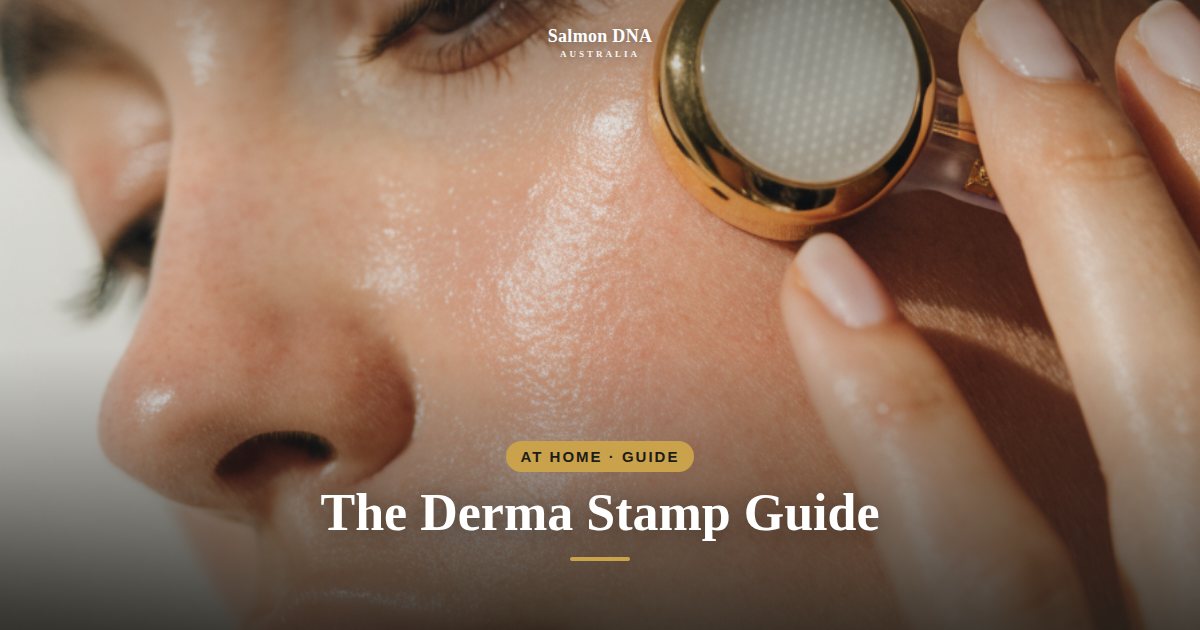
A derma stamp (sometimes written “dermastamp”) is a manual resurfacing tool with a small cluster of fine points on a flat head. Unlike a roller or a motorised pen, you press it straight down and lift, a vertical “stamp” motion, which makes it precise and gentle. It is one of the most beginner friendly ways to enjoy a controlled version of skin needling at home.
Like all resurfacing, it works by prompting the skin’s natural renewal response, which is associated with the appearance of smoother texture, softened fine lines and a more even, refreshed looking complexion.
Derma stamp vs resurfacing pen vs derma roller
- Derma stamp: pressed straight down, no dragging. Best for targeted areas: a single scar, the lip line, the brows, the sides of the nose. Controlled and gentle.
- Resurfacing pen (skin needling pen): a motorised at home skin tool that works rapidly for fast, even coverage of larger areas like the cheeks and forehead. Most have adjustable depth.
- Derma roller: rolled across the skin; covers area quickly but the fine points enter and exit at an angle, which can be less precise than a stamp.
For first timers and targeted work, a derma stamp is often the easiest place to start.
What depth should a derma stamp be?
For use at home, stay gentle: 0.25 to 0.5mm. This is enough to support serum absorption and the look of refreshed skin without the downtime of clinical treatments. Deeper depths are a professional treatment and should only be performed by a trained skin therapist, so please do not attempt deep work at home.

How to use a derma stamp at home (step by step)
You will need: a sterile derma stamp with a single use head, a gentle cleanser, a PDRN salmon DNA serum or exosome skin booster, and a gentle moisturiser.
- Sanitise. Wash your hands and work in a clean, well lit space. Use a fresh, single use head.
- Cleanse. Remove all makeup and oil with a gentle cleanser, then pat dry.
- Stamp. Press the stamp straight down with light pressure, lift, and move to the next spot, slightly overlapping. Work in small sections so you cover the area evenly. There is no need to press hard.
- Apply your serum. While the skin is freshly stamped it is primed to absorb, so apply your PDRN or exosome serum to support hydration and a calm, comfortable finish.
- Soothe. Finish with a hydrating mask or a gentle moisturiser. Skip actives, fragrance and exfoliants afterwards.
Press straight down, lift, and let a gentle serum do the quiet work.
Derma stamp aftercare
For 24 to 48 hours, keep it simple and gentle: no makeup for the first 24 hours, broad spectrum SPF 30+ during the day, plenty of hydration, and no retinoids, acids or strong actives for about a week. Space your sessions roughly 4 to 6 weeks apart. For the full routine, see our resurfacing aftercare guide.
Derma stamp before and after: what to expect
Results are gradual and cumulative rather than instant. In the first day or two skin may look a little flushed; most people then notice a fresh, hydrated glow within a few days. The appearance of smoother texture and softened fine lines or scarring typically builds over three to six consistent sessions paired with the right serum. Photograph the same spot in the same light each time so your before and after is honest. For a full walkthrough with a real customer gallery, see our resurfacing before and after guide.
Which serum to pair with a derma stamp
A derma stamp is only as good as what you press in afterwards. A gentle, fragrance free PDRN salmon DNA serum or exosome skin booster is ideal, because it is biocompatible and supports the look of hydrated, calm, smoother skin. New to it? Browse our derma stamps and resurfacing tools and pair one with a PDRN or exosome booster in the same routine.
Shop derma stamps & resurfacing tools →
CureNex Salmon DNA & Peptide Daily Serum
Gentle, fragrance free daily PDRN to press in with your at home skin tool.
$49.50 AUDAfterpay available · free shipping over $150Shop the daily serum →
Frequently asked questions
What does a derma stamp do?
At a gentle depth it creates tiny microchannels that prompt the skin’s natural renewal response and help serums absorb, supporting the appearance of smoother, more even, refreshed looking skin over a series of sessions.
What depth should I use on a derma stamp at home?
Stay gentle, around 0.25 to 0.5mm. Deeper stamping is a clinical treatment best left to a trained professional.
Is a derma stamp better than a derma roller?
A stamp presses straight down, so it is more precise and gentle for targeted areas like scars or the lip line. A roller covers larger areas faster but enters the skin at an angle. Many people prefer a stamp for control.
How often can I use a derma stamp?
Most people space sessions around 4 to 6 weeks apart at a gentle depth, depending on skin type and goals.
What serum should I use with a derma stamp?
A gentle PDRN salmon DNA or exosome serum is ideal because it is biocompatible, fragrance free and supports the look of hydrated, calm skin.
Disclaimer: these are cosmetics, not therapeutic goods, and are not intended to diagnose, treat, cure or prevent any disease or condition. Stamping at home should be done at a gentle depth (0.25 to 0.5mm) with sterile, single use heads; deeper treatments should be performed by a trained professional. Always patch test; not suitable for those with fish allergies.
